
At the Federal Neuropsychiatric Hospital, Budo-Egba, Kwara State, history was written on June 3rd, 2026. The HealthyMinds Wellness Initiative officially launched with its Inaugural Mental Health Summit, a gathering that brought together the full spectrum of Nigerian society — clinicians, legislators, legal practitioners, academics, traditional rulers, and community leaders.
This was not just another conference. It was a declaration: that mental health in Nigeria is a community matter, a cultural matter, and a national priority.
The Vision of HealthyMinds
The Founder and CEO Dr. Simeon Yinka Diran Ategbese opened the summit with a deeply personal testimony. His journey into psychiatry, shaped by experiences in Nigeria and the UK, revealed the harsh realities of stigma, neglect, and under-resourced facilities.
HealthyMinds, he explained, rests on four pillars:
• Awareness – educating Nigerians about mental health.
• Advocacy – pushing for the National Mental Health Act 2021 to be implemented and domesticated at state level.
• Advice – equipping families and communities with practical guidance.
• Assistance – ensuring access to care for those who cannot afford it.
 “This is not merely an organisation,” Dr. Ategbese declared. “It is a movement.”
The Scale of the Challenge
Delivering the keynote, Professor Alfred Bamiso Makanjuola of the University of Ilorin Teaching Hospital painted a sobering picture:
• One in four Nigerians may experience a mental health disorder in their lifetime.
• Depression, anxiety, suicide, and substance abuse dominate the landscape.
• Fewer than 10% of those in need receive adequate treatment.
He traced Nigeria’s psychiatric history from traditional spiritual frameworks to modern institutions, highlighting pioneers like Adeoye Lambo, whose work in community psychiatry reshaped global understanding of mental health.
While progress has been made — in treatment, training, and specialised services — challenges remain: inadequate manpower, poor funding, and the brain drain of professionals to better-resourced countries.
Professor Makanjuola praised the National Mental Health Act 2021, signed into law in 2023, as a landmark. Yet he cautioned: “Legislation is only as meaningful as its implementation.” His recommendations included stronger government investment, incentives for psychiatry graduates, community-based care, collaboration with traditional practitioners, and sustained research.
Government Commitment
The voice of government came through Hon. Seun Ogunniyi, Chairman of the House Committee on Health and Nutrition, Kwara State House of Assembly. His remarks were not ceremonial but a pledge: the legislature will support the domestication of the Mental Health Act in Kwara State.
He acknowledged the shortage of skilled personnel but pointed to Kwara’s infrastructure — the Federal Neuropsychiatric Hospital, University of Ilorin Teaching Hospital, and Kwara State University Teaching Hospital — as a foundation for leadership in mental health care and research.
Beyond policy, Hon. Ogunniyi urged cultural change: rejecting stigma, encouraging early identification of depression and anxiety, and restoring family values to combat substance abuse among youth.
Panel & Recognition
A panel discussion featuring Hon. Ogunniyi, Chairman House Committee on Health and Nutrition, Kwara State of assembly, Barrister Agboola Omonile, Legal Practitioner and Dr. M.O. Salihu, Consultant Psychiatrist KWASUTH explored the prospects and challenges of implementing the Act. The consensus: obstacles are real but surmountable with political will, institutional coordination, and civil society pressure.
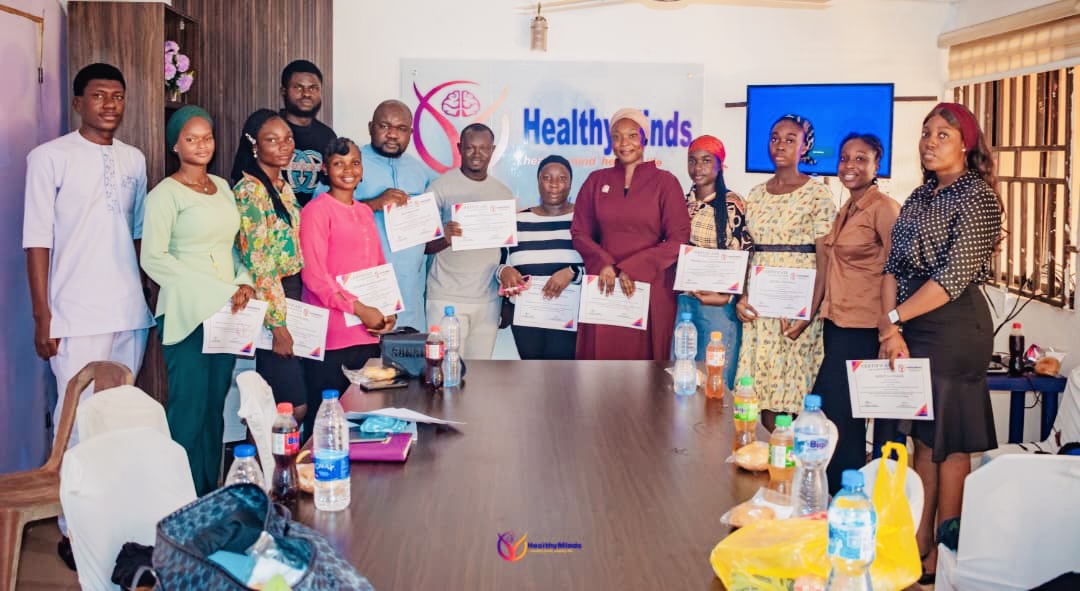
Awards were presented to dignitaries and panellists, including the Oloro of Oro-Ago and the Oloro of Oro Kingdom, recognizing their leadership and commitment.
A Collective Call to Action
The summit closed with a powerful reminder: mental health is a critical public health issue demanding cross-sectoral action. Governments, healthcare systems, traditional rulers, civil society, and citizens all share responsibility.
HealthyMinds has lit the torch. The challenge now is sustaining the flame. As Dr. Ategbese charged: “This is a new chapter.”
.jpg)